The Internet unites people separately

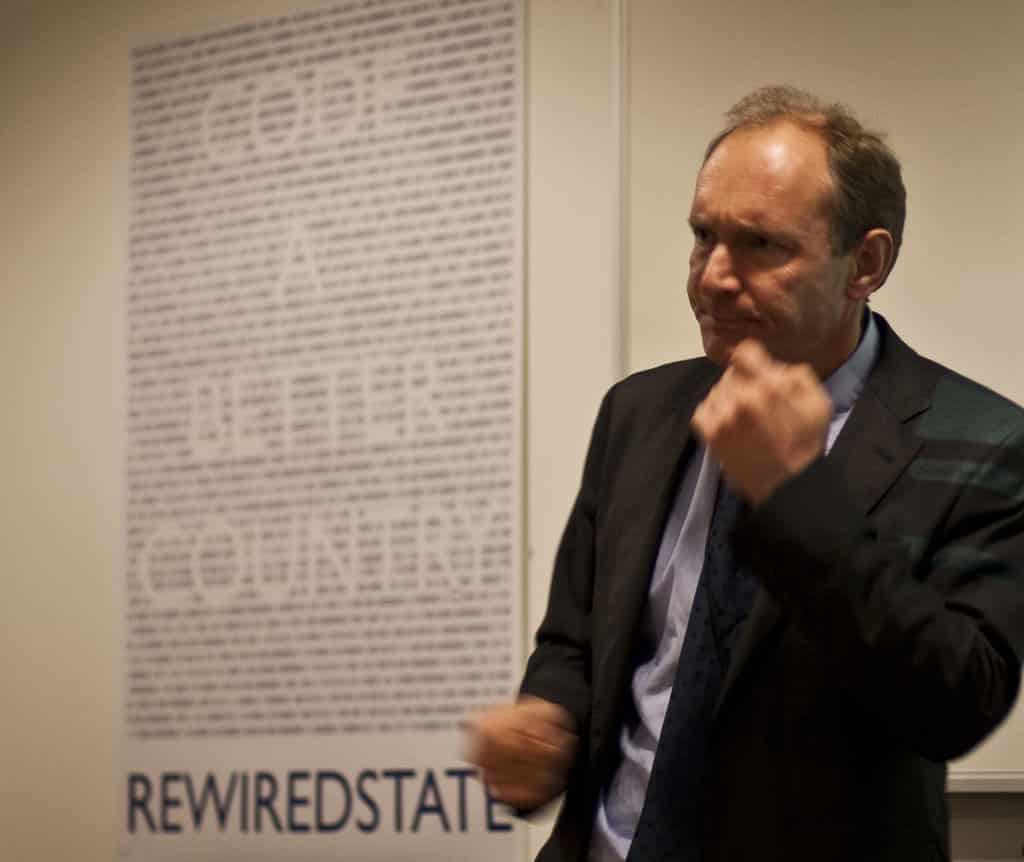
Does the web unite or divide?The dream of Sir Tim Berners-Lee is to have a World Wide Web that is “free and open” and which extends its “benefits to all people on the planet”. It is a dream which means everyone benefits from being connected, learning from each other and sharing in that new-found knowledge. A natural extension of such a dream is that we all live in closer harmony as we understand more about each other. Indeed, that is often touted as one of the benefits of social networks and the wider web. But new research suggests this might be a forlorn hope.

It seems the Internet could be driving us further apart, or at least not bringing about the social change we think it is. The Arab Spring is a good example. Apparently it is the Internet and social networks like Facebook and Twitter which have enabled oppressed people to rise up against their rulers. True, that may be the case – but the chances are those oppressed people always knew they were oppressed. And the oppressors still think they should be. In other words, the two opposing viewpoints have always existed and still do – the Internet has not changed the views, just enabled one to become more powerful than the other.

If you are a football fan you no-doubt love your team and simply detest that “local Derby” opposition. It has always been the way ever since your club was founded probably. Having fan-based web sites, seeing all those Tweets from each other has done nothing to bring together old rivalries and for the likes of Manchester City fans to say that those folks from Old Trafford are actually a really nice bunch of people. The divisions are the same as always, in spite of the increased sharing of news, views and information via the Internet.

So the question which needs to be asked is whether or not the Internet divides or unites? New research suggests it is increasing division, rather then reducing tensions. Indeed, this study of Twitter suggests that divisions are being emphasised, rather than eroded. That’s because it seems we tend to follow those people whose views we agree with. We then see more of those viewpoints, which helps underscore that our view is the correct one. Twitter following is “clustered” – we surround ourselves with the people who share our own views and prejudices, thereby confirming our own position on things. We tend not to see the opposing views and learn from them.

For anyone running an online business this has a significant impact. If people think your customer service is rubbish they will follow people, connect with individuals and read more about that notion. All this does is simply confirm they were right all along and that your business sucks. You can, of course, put out loads of examples of people who are really happy with what you do, you can try and demonstrate you really are fantastic, but the people who are surrounded by the “rubbish” position are unlikely to hear.

Similarly, if your competitors are busy using social media to get clusters of potential customers who all think that they products and services are brilliant, they’ll never really hear that your alternatives are much better. If your competition has loads of adoring fans, breaking into that cluster is nigh-on impossible.

So, what can you do? Firstly, make sure you have loads of adoring fans by creating first-rate products and services. Secondly, avoid negative clusters surrounding your business by ensuring that everything you do and your customer service is simple exemplary. In other words, even though it appears you cannot unite people with differing viewpoints after all, you can ensure that everyone shares the same view by establishing a business and products and services which are top notch. Your online success is not really down to how well you use Google, how well you create SEO tricks, but largely down to how well you run your business as a whole. Concentrate on that and the online success will follow.

Useful items
  • DL PROTECTOR - Quick and Easy Way To Stop Theives Stealing Your Downloads Works with WordPress and HTML/PHP pages to protect your ebooks and software links - Super easy to use... Get your copy now at the introductory price and receive free lifetime updates too!
  • LINKEDIN Power User (Warrior Edition) LINKEDIN Power User is 4 great power Tools in 1 package to help you make the most of sourcing linkedin open groups, conducting due dilligence on businesses and people, finding great content to share with your groups and multi group dispatching that conten
  • Massive Traffic Explosion Massive Traffic Explosion - The Original and Complete 7 Module Video Training Course - At A Staggering 91% Discount!

Be proud of the rubbish and the nastiness you see on the internet

Remembrance sunday poppyEverywhere you look online you will be reminded of nastiness, crime and downright evil. Whether it is a simple as a spam email, as complex as identity theft or as horrible as Internet trolling, you can’t avoid the negative aspects of the online world. There are rumours on Twitter, nasty postings on Facebook and websites dedicated to terrorism. On top of all this, your children can be preyed upon by people wishing to “groom them” and your email address can be hijacked to send out porn to all your friends. It’s a mean and nasty place this Internet.

But we should be proud of that fact. You and I are unlikely to condone any of this disgusting, sickening and criminal behaviour. But, the fact is, such behaviour is possible because we are free. Without the freedoms our society has you would not hear about online nastiness. It would be banned, filtered out and we would be living in a clinical online world; just ask many people in China. And why would there be no online criminals or nasty people? Well, the authorities would have executed them.

The fact that there is much nastiness online is actually a testament to the free society in which we live – a society for which millions of service men and women have given their lives. Today of all days we should remember that our freedom to post whatever we want online was fought for. We should remember that our freedom to download whatever we want, is something people died for. And we should remember that our freedom to campaign against the nastiness online was something that was hard won.

As you surf your way around the Internet today, spare a thought for the men and women whose selfless actions allowed you to do so. Without them, we would not have the Internet as it is today – warts and all.

If you wish to support the people who have allowed you to use the web freely, please visit The Royal British Legion.

Can we learn from Hackergate?

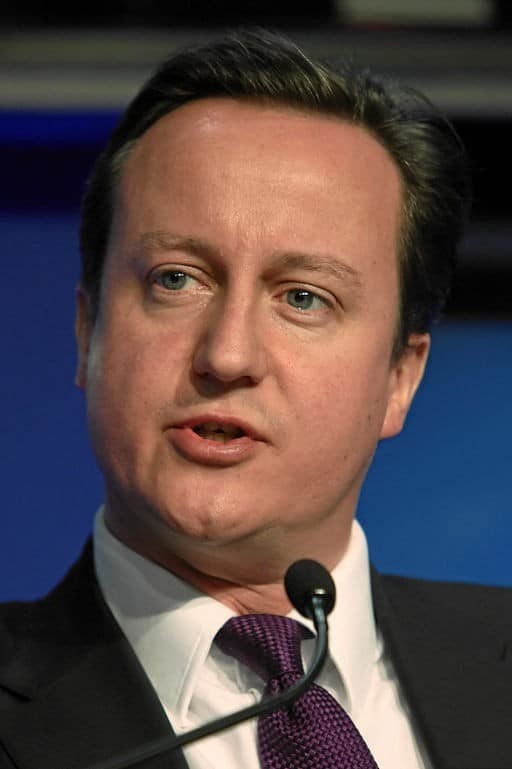
The Prime Minister David Cameron is busy today answering questions from politicians trying to score points against him. His problem is he employed Andy Coulson, a former editor of the News of the World – the newspaper which illegally hacked into phones, paid the police for information and brought the reputation of three major institutions (press, police and politics) into utter disgrace. Yesterday, of course, we had the spectacle of the Murdoch family fending off questions about the scandal. Who knows what tomorrow will bring? This story runs and runs with amazing new revelations every day.

The thing is, if you were Prime Minister and someone said “we’ve got this chap, ex-newspaper editor, and we reckon he’d make a good PR adviser for you”. You might think “sounds a good idea”. But you might remember that the newspaper had been involved in a phone hacking scandal. You might then say “Mmm, possibly but it doesn’t smell right to me”.

Imagine too that you are the most senior police officer in Britain and someone offers you a stay in a health spa, the value of which is £12,000. You might think, “sounds lovely, but doesn’t smell it’s the right thing to do”.

Possibly too you are the leader of a global business employing 52,000 people when you hear that several of them are involved in paying police officers or listening to other people’s voicemails. You too might think “that doesn’t smell right”.

Co-incidentally, last night I received a phone call from a friend who was asking for advice about a web site he was visiting. It offered him rooms in Chelsea apartments for a mere £40 a night. He wanted to know if there was a way of checking out the web company to see if they were genuine.

But, considering Chelsea is the millionaires’ hangout in London, does £40 a night seem right? I asked my friend “does it smell right?” He admitted it didn’t – and as I pointed out, that’s all you need to make an online decision. If it doesn’t “smell right”, if it appears to be too good to be true, if your “gut feeling” is negative, the chances are it is something to avoid.

We don’t need fancy online checking systems to ascertain whether a website is worthwhile. We just need our gut instinct or a keen nose for whether or not it “smells right”.

Which begs two questions – firstly, does your website smell right to other people? And secondly, how come the “gut instinct” of politicians, senior police officers and those in charge of multinational companies is so weak?

Prince Philip reminds us of the internet

Prince Philip, the Duke Of Edinburgh is 90 today – Happy Birthday old chap. In a much-publicised interview with the BBC’s Fiona Bruce he was brusque, pompous and downright rude. He won’t care I said that because, as he admitted in the interview he simply does not care what we think about him. His Royal Highness is well-known for his forthright views and his devotion to his wife, The Queen. But there is little doubt he represents an elite. Perhaps his views about the media, about us and about society in general all stem from the fact that almost all of his life has been spent living in a rather different world to the one the rest of inhabit.

HRH Prince Philip Duke of Edniburgh 90 Today: By Flickr user Steve Punter derivative work: Andibrunt via Wikimedia CommonsAnd recent research shows that almost everything you read online is like that too – from a world that most people do not inhabit. According to sociologists from the University of California almost all of the online content we are faced with is produced by the elite – the powerful, highly educated and the rich are the people who produce almost all of the web’s content. The rest of us don’t get much of a look-in.

According to Jen Schradie, who conducted the research: “Conventional wisdom tells us that the Internet is levelling the playing field and broadening the diversity of voices being heard. But my findings show the Internet is actually reinforcing the socio-economic divisions that already exist, and may even heighten them, which has all sorts of implications as more of civic and economic life moves online.”

The study showed that in spite of the plethora of blogs, the burgeoning use of social media and the vast number of domain names being registered each day, only around 10% of people who use the Internet are contributors. Most are simply consumers of the content. The billions of web pages that now exist are actually produced by the minority. And that minority is mostly highly educated and rich. Not quote the universal free system that Sir Tim Berners Lee imagined.

So what should be done about it? Well, making your website more interactive, enabling more people to contribute and getting as many people involved as possible with your web presence would help. It means taking a business from being “controlling” to being interactive. Interestingly, new academic research on lecturing university students shows that this kind of approach works.

In this study students were split up mid-course and put into two groups matched for exam results. One group continued to receive their normal lectures from a highly-rated lecturer. The others received no lectures at all for the remainder of their course but were taking part in interactive group sessions with non-experienced lecture staff. The final exam results were better in this second group than the group who continued with normal lectures. Not only that, all other measures of success – including lesson attendance were also better. Indeed, attendance at the group sessions went UP as the course progressed.

What the study showed was that participation works. It demonstrated that not having an expert to “teach” was not a problem – indeed, the group without expert input did best in the  study. It is yet more data that shows us the old way of “chalk and talk” should be killed off, in just the same way as the old way of Internet “broadcasting” has also had its day. Instead, interactivity is being revealed as the superior way of engagement. The elite don’t like interaction; with it, their elevated position gets reduced. Hence you’ll find all sorts of reasoning online as to why interaction cannot work – especially from many business leaders. Tosh.

Perhaps it also explains Prince Philip’s behaviour; his opportunities for meaningful interaction with “real people” are limited. Which means he hasn’t had the opportunity to learn from us that actually we are mostly OK. And if he did check on the Internet, he still wouldn’t know because like him, the bulk of the Internet is an elite. Which begs the question – what kind of online world do you wish your business to be associated with?

Break the rules online and people will respect you

So, now you know – it was Ryan Giggs after all…! Oh – you already knew that. Drat! I thought I was giving you some “news”. If you have been using Twitter for the last couple of weeks you can’t have avoided the name of the footballer with the super-injunction – which is still in place, by the way – so I am in contempt of court by telling you his name. Today, of course, people will line up to complain about the MP who used Parliamentary Privilege to reveal Giggsy. I suspect that many of those complaining are concerned that their private life could be revealed if we don’t have some kind of privacy law. My advice to them – and to Ryan Giggs – is if you don’t want your less-than-savoury antics exposed in the national media, then just behave yourself.

Ryan GiggsThe problem is that people in positions of relative power – such as MPs and Premier League footballers – actually believe they live under different rules to the rest of us. The think it is OK to break the rules. New research from the University of Amsterdam shows that people with power, or who believe they have it, do actually behave in different ways to people who do not have power or authority. MPs might like to say they abide by the same rules as us, but their behaviour indicates they do think they are “different”. So when it comes to privacy, they jump up and down because they realise the conflict in their actions; they want the rest of us to believe they behave like “normal” people, whilst they know they actually behave in unacceptable ways and want a privacy law so that fact is not discovered.

Authority comes from bad behaviour

But the real problem is not them, not the rich and powerful. The Dutch research shows the real issue is us. We actually appear to condone the bad behaviour. It turns out that when we see people behaving in ways that are less than acceptable we believe that those individuals are powerful – even if they are not. When someone enters a meeting room, chucks their case on the floor, puts their feet up on the desk and interrupts everyone else we think they are rude. But…we also appear to believe they are more powerful and have more authority than anyone else in the room. That has all sorts of consequences – such as deferring to them, agreeing with them and doing their bidding. Several studies of authority figures show us that “normal” people become subservient to the one who has apparent authority.

Online, you can see this happening all the time. Someone becomes “the authority” on a particular topic and before you know it everyone starts to accept their point of view – their apparent power and authority has had consequences on the rest of us. On the Internet you can find all sorts of advice on “dominating your niche” – indeed, you will find such advice on this very website…! If you behave online as though you did have power – rather like the rude person in the meeting room – the rest of the web world will treat you as someone with authority and power.

So, how does this all affect your online presence? It’s easy; break some rules…! I’m not suggesting breaking the law – after all you wouldn’t be so daft as to go against the High Court and reveal footballer’s name on your website would you? Oh, whoops…! But if you behave online rather like the stooges in the Amsterdam study, you will even more dominate your niche.

For example, subtle rule-breaking can help. I break the rules every day on this website by going against grammatical niceties. Unlike many business websites that try to abide by the “rules of business writing” and the “rules of grammar”, I don’t. I simply write as I speak, with all the grammatical errors included. That’s like coming into the room and putting my feet on the desk.

Other rules that get broken by authority figures online include sending more emails to you than you might think is acceptable, or having pop-up windows, for instance. The accepted “rule” is that you shouldn’t email unnecessarily nor should you annoy people with pop-ups. But online, the people who flout these rules are often deferred to as “experts” in their fields.

The old adage that “rules are made to be broken” may have a more subtle meaning than we ever previously thought. We don’t know if Ryan Giggs broke any rules; what we do know is that online the Tweeter who broke the rules has had a considerable influence, with just six Tweets,.


Some of the links on this page are Affiliate Links and lead to sites where I can earn commission income should you buy anything. Graham Jones is a participant in the Amazon EU Associates Programme, an affiliate advertising programme designed to provide a means for sites to earn advertising fees by advertising and linking to Amazon.co.uk

This site uses cookies. For more information please see the Privacy page.

twitter facebook linkedin youtube rss Google Plus